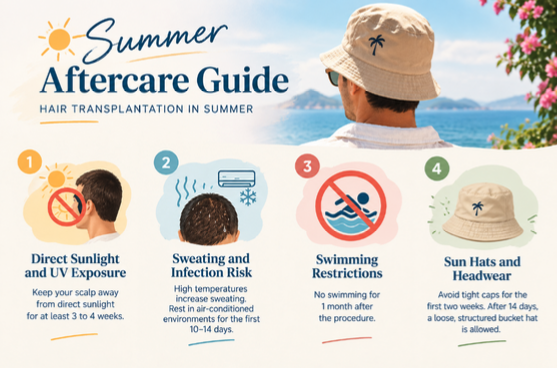

When deciding to undergo a hair transplant, timing is one of the most common concerns for patients. You might wonder whether summer heat will harm your new grafts or if winter cold will slow down your recovery. The short answer is clear: hair transplantation can be successfully performed in any season of the year. At Long Hair Center in Istanbul, our medical team performs successful hair restorations 365 days a year. The overall success of your surgery does not depend on the weather outside, but rather on how well you follow post-operative care instructions. However, each season presents unique environmental conditions that require specific precautions. Understanding how different seasons affect your recovery phase will help you protect your investment, manage your daily routine, and choose the ideal time for your procedure. Summer is a very popular season for hair transplantation because many international patients combine their procedure with summer holidays or annual leave. While travelling in summer is convenient, recovering in hot weather requires strict discipline. Direct Sunlight and UV Exposure: Newly implanted grafts and healing scalp tissue are extremely sensitive to ultraviolet (UV) light. Direct sun exposure can cause skin discoloration (hyperpigmentation) and damage weak follicles. Patients must avoid direct sunlight for at least 3 to 4 weeks after surgery. Swimming Restrictions: Swimming in pools, ocean water, or lakes is strictly forbidden for 1 month post-op. Chlorine in swimming pools damages sensitive hair follicles, while natural water bodies carry bacteria that can cause serious infections. Sun Hats and Headwear: You cannot wear tight caps during the first ten days. After 10 days, you can wear a loose, structured bucket hat to shade your face and scalp from the sun. Many surgeons consider winter an excellent time for surgical procedures. Cooler temperatures make the immediate recovery phase more physically comfortable, though cold weather brings its own challenges. Easier Sweat Management: Cold weather minimizes sweating, keeping the scalp clean and dry during the critical first 10 days when grafts are anchoring into the blood supply. Comfortable Indoor Recovery: Patients naturally spend more time indoors during winter, making it easier to rest, follow post-op washing protocols, and avoid external hazards. Protecting Grafts from Freezing Winds: Strong, icy winds can dehydrate healing scalp tissue and cause discomfort. You should protect your head when walking outdoors. Beanie and Hat Caution: Winter beanies are typically made of wool or tight elastic materials that can easily catch on fresh grafts and pull them out. Loose-fitting, structured headwear must be chosen until your doctor confirms the grafts are fully secured (usually after 10–14 days). Spring and autumn—often called the "shoulder seasons"—are widely regarded by patients as the most comfortable months for medical travel. Moderate Climate Conditions: Mild temperatures mean you do not have to worry about excessive summer sweating or freezing winter winds. This creates an optimal environment for comfortable scalp healing. Flexible Travel and Recovery: Pleasant weather makes light walking and city exploration much easier during your stay in Istanbul, provided you avoid strenuous physical activities. Managing Seasonal Allergies: If you suffer from spring or autumn allergies, frequent sneezing or an itchy scalp can be troublesome. Patients are advised to take prescribed antihistamines to prevent touching or scratching the recipient zone. It is a scientific fact that humans experience minor seasonal hair shedding, similar to many other species. Many people notice increased hair shedding during early autumn and late summer. However, this natural cycle does not affect transplanted hair grafts. Transplanted hair follicles are harvested from the genetically permanent donor zone (the back and sides of the head). Once these grafts successfully take root in their new location, they follow their natural growth cycle regardless of the season. While you will still experience the expected "shock loss" phase between weeks 3 and 8 after surgery, this is a normal part of the process and not a seasonal reaction. At Long Hair Center, we believe the best time for your hair transplant is when you feel ready. Medical success is achieved through surgical precision, advanced techniques, and dedicated aftercare, not the calendar month. Whether you undergo surgery in July or January, our medical team provides customized post-operative kits, detailed washing instructions, and continuous online follow-ups to ensure high graft survival rates and maximum density. Some studies suggest that hair growth rates may be slightly faster in warmer months due to increased blood circulation in the skin. However, the difference is negligible. Your transplanted hair will follow the standard timeline: initial growth begins around month 3, with major density visible by months 10 to 12. Regardless of the season, we recommend taking 7 to 10 days off work. This allows the initial scabs to fall off naturally through regular washing and ensures your grafts are safely anchored before you return to your daily routine. No. Helmets put direct pressure on the scalp and cause intense sweating. You must avoid wearing any heavy helmet for at least 1 month post-operation, regardless of the weather. Choosing when to restore your hair should fit seamlessly into your life. Our expert team at Long Hair Center in Istanbul is ready to guide you through every step of your journey, ensuring exceptional, natural-looking results in any season. Are you ready to take the next step? Contact us today for a free, personalized consultation and let us help you map out your hair restoration plan. The Effect of the Seasons on Hair Transplantation: When Is the Best Time?
Hair Transplantation in Summer: Pros, Cons, and Crucial Rules
Hair Transplantation in Winter: Advantages and Protective Steps
Hair Transplantation in Spring and Autumn: The Ideal Balance
Seasonal Comparison for Hair Transplant Recovery
Season Primary Advantage Main Risk / Challenge Key Precaution Summer Vacation time and easy scheduling Sun exposure and heavy sweating Stay in AC and avoid swimming for 1 month Winter Minimal sweating and easier indoor rest Cold winds and tight winter hats Wear loose structured hats, avoid beanies Spring Mild temperatures and comfortable travel Seasonal allergies and itching Take antihistamines if needed; don't scratch Autumn Balanced weather and optimal healing conditions Transition to cold weather Keep scalp hydrated and follow washing routine Does Seasonal Hair Shedding Impact Your Results?
Long Hair Center Policy: Patient-Centred Timing
Frequently Asked Questions
Does Hair Grow Faster in Summer Than in Winter?
How Long Should I Stay Off Work Depending on the Season?
Can I Wear a Helmet (Motorcycle/Construction) After Surgery in Hot Weather?
Plan Your Transformation with Long Hair Center
The Effect of the Seasons on Hair Transplantation: When Is the Best Time?